ML Engineer · Google
Haiyang Huang
Research on efficient
machine learning systems.
Efficient ML systems · Scalable inference · Interpretable learning
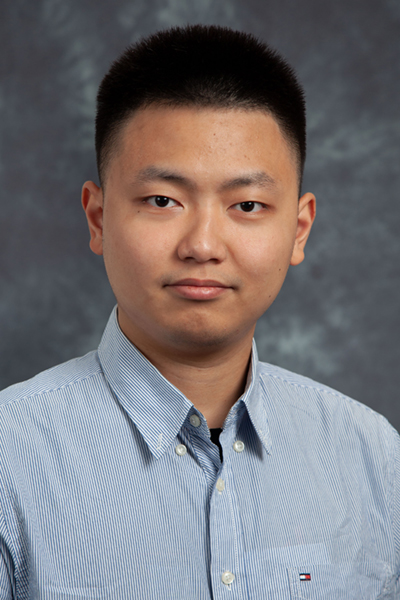
About me
I’m an ML Engineer at Google. I graduated with a PhD in Computer Science from Duke University, where I was advised by Cynthia Rudin and Benjamin C. Lee.
During my PhD, I studied efficient machine learning systems and scalable inference, including memory use and inference efficiency for mixture-of-experts models. My doctoral research also covered interpretable machine learning and dimensionality reduction for data visualization.
Before Duke, I earned a bachelor’s degree in Mathematics and Computer Science at the University of Michigan, where I worked with Jenna Wiens.
Efficient ML systems
Improving large-scale inference through dynamic gating, expert buffering, and load balancing for mixture-of-experts models.
Explore the workInterpretable learning
Understanding visual concepts and building models whose decisions we can inspect.
Data visualization
Revealing local and global structure in high-dimensional data.
Selected research
All publications- NeurIPS
Updates
Archive| Apr 01, 2026 | The Rashomon Effect for Visualizing High-Dimensional Data is accepted at AISTATS 2026. |
|---|---|
| Apr 11, 2025 | Our LocalMAP paper is published in the AAAI 2025 proceedings. |
| Nov 10, 2024 | Two of my papers were accepted at NeurIPS 2024: efficient MoE inference and parametric dimensionality reduction. |
| May 06, 2022 | I am thrilled to join Facebook AI Research (FAIR) as a research intern starting at the middle of May! |
Get in touch
Let’s connect.
Reach out on LinkedIn for research conversations and collaborations.